Why Physician-Only Care Matters in Pain Medicine
At Newport Pain Management, every visit and every procedure is with Dr. Scott personally. A pain specialist explains why physician-only care and long experience matter so much in chronic pain.

At Newport Pain Management, every visit and every procedure is with Dr. Scott personally. A pain specialist explains why physician-only care and long experience matter so much in chronic pain.
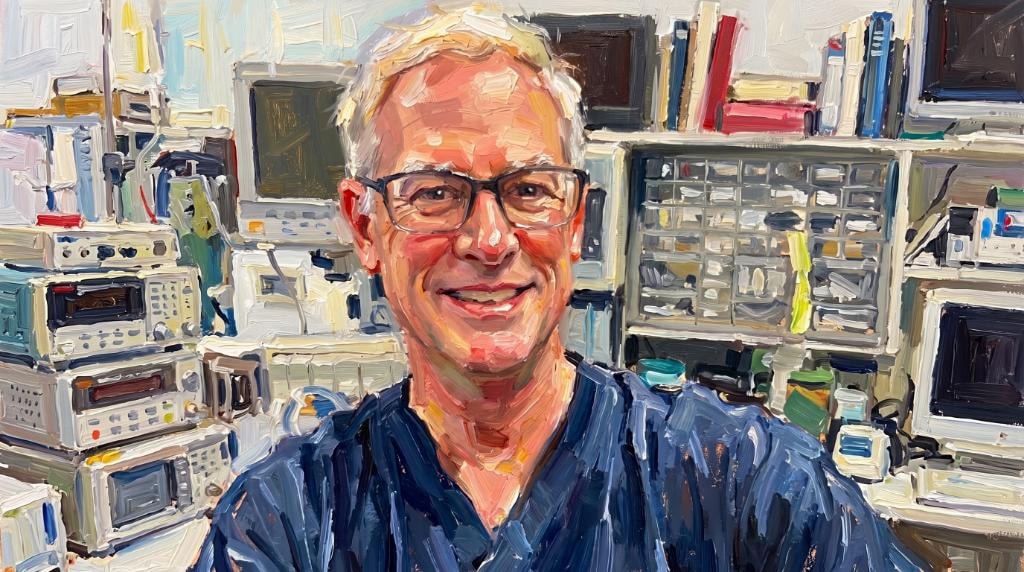
When you call Newport Pain Management, you will see me. Not at the first visit only, and not just for procedures. At every evaluation, every follow-up, and every injection, the physician in the room is the same one: me. We have never employed physician assistants or nurse practitioners, and we never will.
That is unusual today, and patients sometimes ask why we run the practice this way. This post is my answer.
How most pain practices are staffed today
Over the past two decades, much of American medicine has moved to a team model. A physician oversees the practice, and physician assistants (PAs) and nurse practitioners (NPs) handle a large share of the visits, especially follow-ups and medication management. In many busy pain practices, a patient may meet the physician once, at the start, and then see other clinicians for most of the visits that follow.
California has gone further. Under a state law passed in 2020, some nurse practitioners can now practice without physician supervision at all, after completing a transition period.
There are good reasons for the team model. It expands access, shortens wait times, and lets a practice see more patients. Many PAs and NPs are skilled, dedicated clinicians. But it is a different model of care than the one I chose, and in pain medicine I believe the difference matters.
Why pain medicine depends on judgment
Pain is not a lab value. There is no blood test or scan that measures it, and the place that hurts is not always the place the problem comes from. Pain in one area is often referred from another: a hip problem felt in the knee, a spine problem felt down the leg, a pelvic nerve problem felt somewhere unexpected.
Chronic pain also changes over time. A diagnosis that seemed clear at the first visit may look different after the first treatment. How you responded to an injection, whether a medication helped for two weeks and then faded, whether the pain moved, sharpened, or changed character: each of those details is a clue about what is really going on and what to try next.
Reading those clues well takes two things: deep training, and knowing the patient's whole story. When the same physician evaluates you, performs your procedures, and sees you at every follow-up, nothing gets lost between providers. The person deciding the next step is the person who saw how you responded to the last one.
What physician-only care looks like here
In practical terms, physician-only care at Newport Pain Management means:
- Your first evaluation is with me. I take the history, examine you, review your imaging, and build the plan.
- Every follow-up is with me. Medication adjustments, response to treatment, and changes in your pain are all assessed by the same physician who knows your history.
- Every procedure is performed by me. The physician who decided an injection was right for you is the one who performs it, and the one who sees you afterward to judge whether it worked.
- The plan stays coherent. Medications, procedures, physical therapy, and mind-body techniques are coordinated by one physician rather than pieced together across several clinicians.
The trade-off is that a solo physician-only practice can see fewer patients in a day than a large group. We accept that. It is the reason the model works.
The value of experience
I founded Newport Pain Management in 1996, and it is Newport Beach's longest-established pain management practice. I am a board-certified anesthesiologist, and I completed subspecialty training in pain management at Penn State Hershey Medical Center before opening the practice here.
Thirty years of pain practice is not just a number on a website. It is pattern recognition. After seeing thousands of patients, you begin to notice when a back pain story doesn't quite fit, when a "simple" neuropathy has an unusual feature worth chasing, or when a treatment that usually works is unlikely to help this particular person. Experience also teaches restraint: knowing when not to do a procedure, and when a medication is unlikely to be worth its side effects.
It also means having watched the field change. I was among the first physicians in the country to use gabapentin for pain, and I have seen several waves of treatment come and go, including the rise of opioid prescribing for chronic pain and the hard lessons that followed. That history shapes how carefully we evaluate each new option before offering it. You can read more about that philosophy in why we've spent 30 years treating pain without leaning on opioids.
What this is not
This is not a criticism of physician assistants or nurse practitioners. They are trained, licensed clinicians, and they provide essential care across medicine every day. Many practices use them well.
Physician-only care is a choice about how this practice delivers care: one physician, one relationship, start to finish. It is the model I believe serves chronic pain patients best, and it is the one I have practiced for three decades.
Why continuity matters most in chronic pain
Continuity of care, seeing the same doctor over time, is one of the better-studied ideas in medicine. A large 2018 review of studies from nine countries found that patients who consistently saw the same doctor had lower death rates than those whose care was spread across many clinicians. Researchers believe the reasons include better-informed decisions, earlier recognition of changes, and greater trust between patient and doctor.
Chronic pain may be where continuity matters most. Many of our patients have been with the practice for years, some for decades. Their pain has changed as their lives have changed: new injuries, aging joints, surgeries, new medications for other conditions. A physician who has followed that whole arc can see a new complaint in context, avoid repeating treatments that already failed, and catch the moment when something genuinely new needs attention.
Questions worth asking any pain practice
Whether or not you choose our practice, these are fair questions to ask before starting care anywhere:
- Who will I see at my first visit, and who will I see at follow-ups?
- Who performs the procedures, and will that person see me afterward to assess the result?
- What is the physician's training and board certification in pain medicine or a related specialty?
- How long has the physician been practicing pain management?
- Who adjusts my medications, and how often will a physician review my plan?
Clear answers to these questions tell you a great deal about the kind of care you'll receive.
When to see a specialist
If chronic pain has been present for more than three months, is interfering with sleep or daily function, or hasn't responded to what you've tried, a pain specialist can evaluate the underlying problem and build a plan around it. Our chronic pain FAQs answer many of the questions patients ask before a first visit.
About Newport Pain Management
Newport Pain Management has provided interventional pain diagnosis and treatment in Newport Beach since 1996. Our medical director, H. Rand Scott, MD, is a board-certified anesthesiologist who completed subspecialty training in pain management and served as an attending physician at the Pain Management Clinic at Penn State Hershey Medical Center before founding Newport Pain Management. He holds privileges at Hoag Hospital and Newport Center for Special Surgery and directs the KetaCure Ketamine Infusion Center.
To request an evaluation, call (949) 759-8400 or visit the contact page.
Medical disclaimer: This post is for general education and is not a substitute for individual medical advice. Always consult your physician about your specific condition and before making any changes to your medications.
Explore Topics
Written by
H. Rand Scott, MD
Medical Director of Newport Pain Management in Newport Beach since 1996. Board-certified anesthesiologist with subspecialty training in pain management at Penn State Milton S. Hershey Medical Center. Former Penn State football player, 1982 national championship team. Sports medicine clinical training on the Penn State football medical staff. Twice named Orange County Medical Association Physician of Excellence.