Chronic Testicular Pain (Orchialgia): Causes, Evaluation, and Treatment
Chronic testicular pain (orchialgia) has many possible sources, including referred pain and post-vasectomy pain. A pain specialist explains how it's evaluated and treated after urgent causes have been excluded.
Chronic Testicular Pain (Orchialgia): Causes, Evaluation, and Treatment
By H. Rand Scott, MD — Medical Director, Newport Pain Management Published September 2026
First — what is NOT for this page
Sudden, severe testicular pain is a medical emergency. In children and adolescents especially, it must be treated as testicular torsion — a twisting that cuts off blood supply and can destroy the testicle within hours — until proven otherwise. Sudden pain in anyone can also mean infection, injury, or other urgent problems. If your pain is acute, stop reading and seek immediate medical care, starting with a urologist or emergency department. This page is about chronic testicular pain, after urgent causes have been excluded.
What chronic testicular pain is
Chronic testicular pain, medically called orchialgia, is defined as intermittent or constant pain, on one or both sides, lasting three months or more and significantly interfering with daily life. It affects far more men than the medical literature would suggest — the condition is under-discussed by patients, under-recognized by clinicians, and consistently under-represented in general health information.
As with any chronic pain, a thorough evaluation comes first — though frequently the physical exam is normal. This is worth naming directly: a normal exam does NOT mean the pain isn't real or is "in your head." It may simply mean the cause hasn't declared itself yet, or that the pain is being referred from elsewhere. Real pain often exists without a visible source; the job of the evaluation is to find the source, not to prove the pain.
Why chronic testicular pain is often difficult to sort out
Chronic testicular pain crosses several medical specialties. A urologist evaluates the scrotum and its contents. A general surgeon may consider hernia. An orthopedist evaluates the hip and low back. A neurologist evaluates the nerves supplying the region. A pain specialist evaluates all of it together as a pain problem. Because no single specialty owns the whole territory, patients often cycle through evaluations — one specialist finds nothing in their domain, refers to the next, and the process repeats.
This is frustrating for patients and it is not the fault of the individual physicians involved. It is a structural gap in how medical care is organized. Recognizing this pattern early — and consulting a pain specialist who can consider the region as a whole — often shortens the diagnostic journey and improves the odds of finding an effective treatment.
Referred causes — pain felt in the testicle from somewhere else
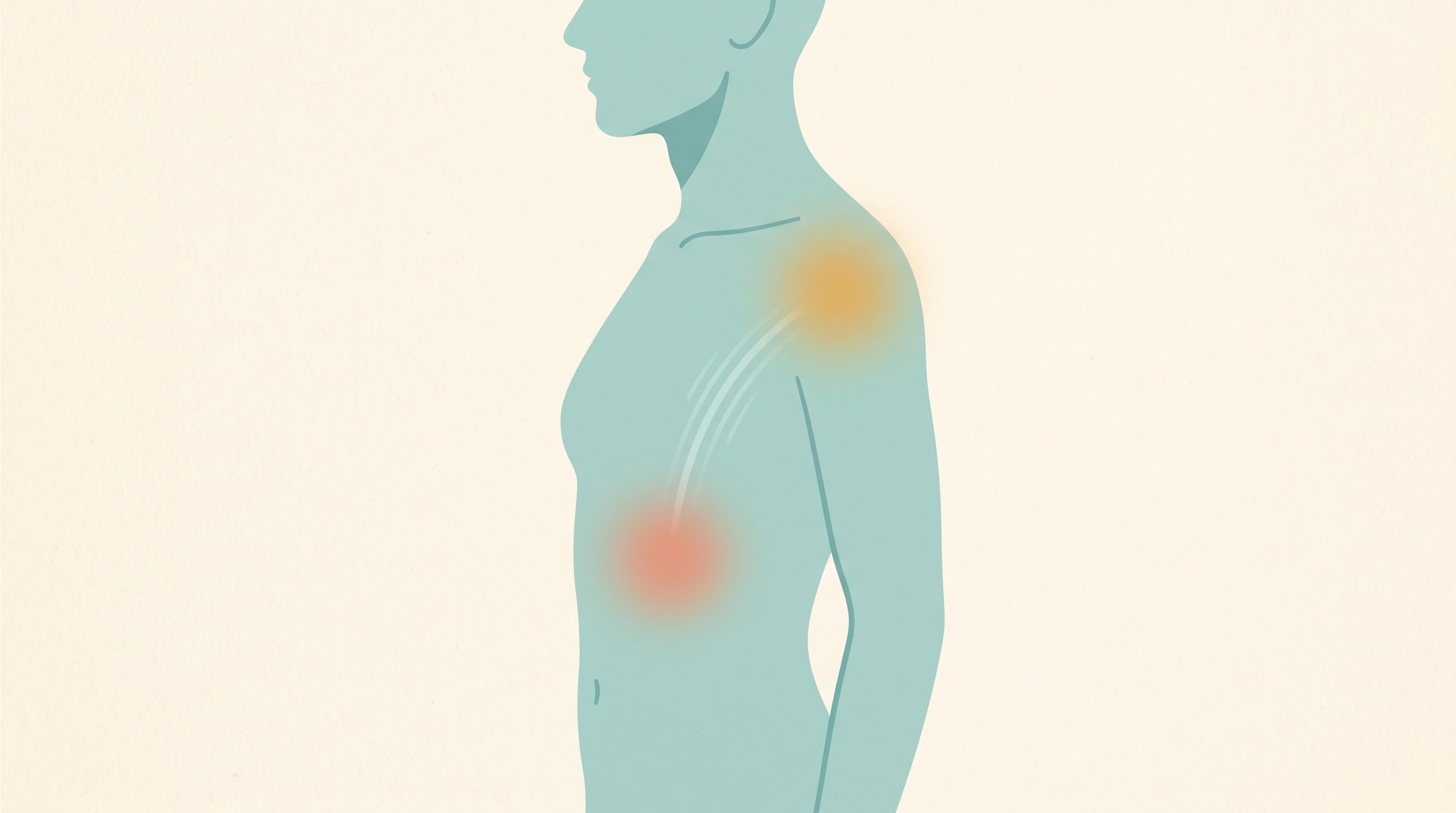
Several structures refer pain to the testicle, and missing this is one of the most common reasons treatment fails. The nerves that supply the testicle originate at the level of the lower thoracic and upper lumbar spine and travel a considerable distance through the abdomen and pelvis. Anything that irritates these nerves along their course can produce pain that is felt in the testicle itself.
Common referred sources include:
-
Kidney stones. A stone on one side can cause severe pain in the testicle on the same side. This is a classic clinical pattern and one of the first considerations when testicular pain is sudden and severe.
-
Genitofemoral nerve irritation. This nerve runs from the upper lumbar spine down through the abdomen and inguinal region to the scrotum. It can be irritated by a hernia, previous inguinal or lower abdominal surgery, or trauma.
-
Ilioinguinal nerve entrapment. A related nerve, often affected after hernia repair or other lower abdominal surgery. Post-surgical nerve entrapment is an increasingly recognized cause of chronic testicular and groin pain.
-
Lower back problems at the L1–L2 levels. The nerve roots at these levels supply sensation to the testicle. Disc problems, facet arthritis, or nerve root irritation at this level can produce testicular pain even when the back itself doesn't hurt.
-
Hip pathology. Hip joint problems occasionally refer pain to the groin and testicle, particularly in men with early osteoarthritis or labral tears.
-
Chronic pelvic pain syndrome. A broader category involving the pelvic floor muscles and their nerves, sometimes producing testicular pain as part of a larger pattern.
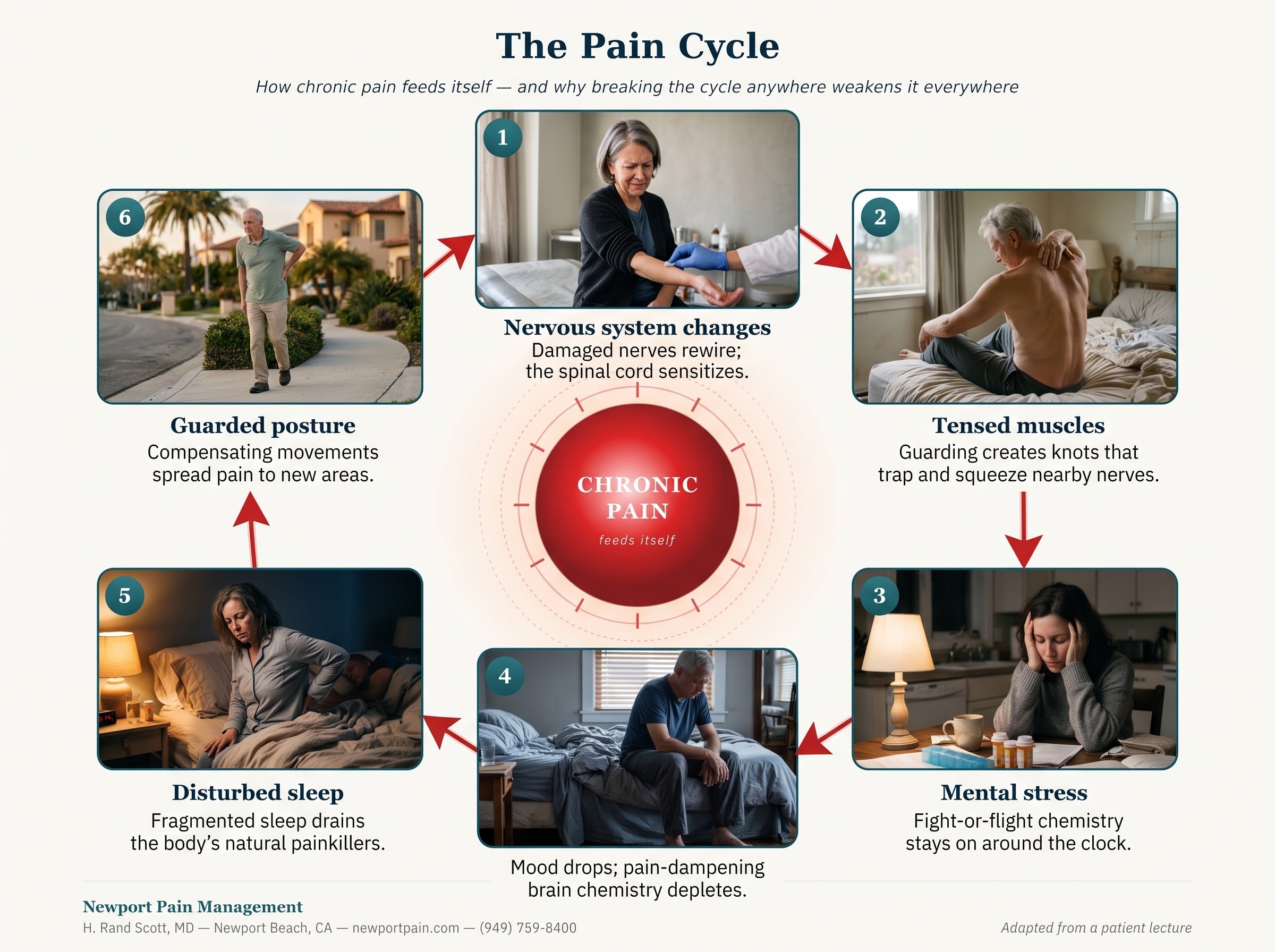
This is why the evaluation of chronic testicular pain looks well beyond the scrotum itself.
Post-vasectomy pain
Chronic pain after vasectomy is substantially more common than most men are told before the procedure. Some studies put the incidence as high as roughly one in five men, with a smaller subset — perhaps two to three percent — experiencing pain severe enough to significantly affect quality of life.
The pain can develop immediately after the procedure or emerge months to years later. Proposed mechanisms include distension of the epididymis from continued sperm production with no exit path, formation of a sperm granuloma at the vasectomy site, and irritation or entrapment of the small nerves in the area. Not every case has a single identifiable mechanism, and many have several contributors at once.
Treatment approaches for post-vasectomy pain include anti-inflammatory medications, spermatic cord nerve blocks (both diagnostic and therapeutic), and — for pain that has not responded to conservative measures — microsurgical procedures including denervation of the spermatic cord or, in selected cases, vasectomy reversal. The choice depends on the pain pattern, the response to diagnostic blocks, and the patient's overall picture.
How chronic testicular pain is evaluated
Evaluation typically starts with a urologist, who performs a thorough exam, obtains a scrotal ultrasound (to rule out varicocele, spermatocele, tumor, or other structural cause), and often does a trial of antibiotics on the possibility of an unrecognized low-grade infection. If these steps do not identify a cause or produce relief, the workup expands.
At the pain specialist level, additional evaluation may include:
-
A detailed history of the pain pattern — where it is, when it started, what makes it better or worse, prior surgeries, prior injuries, and associated symptoms
-
Focused physical examination of the abdomen, groin, hip, and lower back — looking for the referred sources listed above
-
Imaging of the lumbar spine if a referred pattern is suspected
-
Diagnostic nerve blocks — where local anesthetic is placed near a specific nerve to see whether numbing that nerve relieves the pain. This is both a diagnostic tool and, in many cases, a therapeutic one
Treatment options
Once the likely source or sources have been identified, treatment is chosen to match. A comprehensive plan often combines several approaches.
Conservative and pharmacologic
Anti-inflammatory medications (often the first line, particularly for post-vasectomy pain). Medications for neuropathic pain — including certain antidepressants and antiseizure medications used at doses appropriate to nerve pain — can help when the pain has a nerve-irritation quality. TENS (transcutaneous electrical nerve stimulation) is a portable option some patients find useful for symptom management. Pelvic floor physical therapy is often valuable when chronic pelvic pain syndrome is part of the picture.
Interventional
Diagnostic and therapeutic nerve blocks — spermatic cord blocks, ilioinguinal or genitofemoral nerve blocks, and epidural steroid injections when the pain has a lumbar spine origin. These procedures deliver local anesthetic and often a small dose of steroid to the specific nerve suspected of driving the pain. Response to a diagnostic block is one of the most useful pieces of information in chronic testicular pain, both for confirming the diagnosis and for guiding subsequent treatment. Pulsed radiofrequency of specific nerves is another option in selected cases.
Behavioral and adjunctive
Biofeedback and counseling are useful adjuncts, particularly for men whose pain has significantly affected sleep, mood, or intimate relationships. Chronic testicular pain has real psychological effects that most men underreport — addressing them alongside the physical treatment usually improves the overall outcome.
Surgical
Surgery is reserved for pain that has not responded to other approaches. Options include microsurgical denervation of the spermatic cord, hernia repair or revision when a hernia is contributing, and — for post-vasectomy pain in appropriate patients — vasectomy reversal. Surgery is not a first step; it is a considered option when conservative and interventional treatments have been tried without adequate relief.
When to see a pain specialist
If testicular pain has been present for more than three months, if it has not responded to a urologist's evaluation and initial treatment, or if it is interfering with sleep, work, exercise, or intimate life, a pain specialist can help. Chronic testicular pain is treatable — the goal is to find the specific source or combination of sources driving the pain, and to match treatment to what is actually going on.
About Newport Pain Management
Newport Pain Management has provided interventional pain diagnosis and treatment in Newport Beach since 1996. Our medical director, H. Rand Scott, MD, is a board-certified anesthesiologist who completed subspecialty training in pain management and served as an attending physician at the Pain Management Clinic at Penn State Hershey Medical Center before founding Newport Pain Management. He holds privileges at Hoag Hospital and Newport Center for Special Surgery and directs the KetaCure Ketamine Infusion Center.
After you've seen your urologist, to request an evaluation, call (949) 759-8400 or visit the contact page.
This article is for general education and is not a substitute for individual medical advice. Sudden or severe testicular pain is an emergency — seek immediate care.
Medical disclaimer: This post is for general education and is not a substitute for individual medical advice. Always consult your physician about your specific condition and before making any changes to your medications.
Explore Topics
Written by
H. Rand Scott, MD
Medical Director of Newport Pain Management in Newport Beach since 1996. Board-certified anesthesiologist with subspecialty fellowship training in pain management. Former Penn State football player, 1982 national championship team. Sports medicine clinical training on the Penn State football medical staff. Twice named Orange County Medical Association Physician of Excellence.