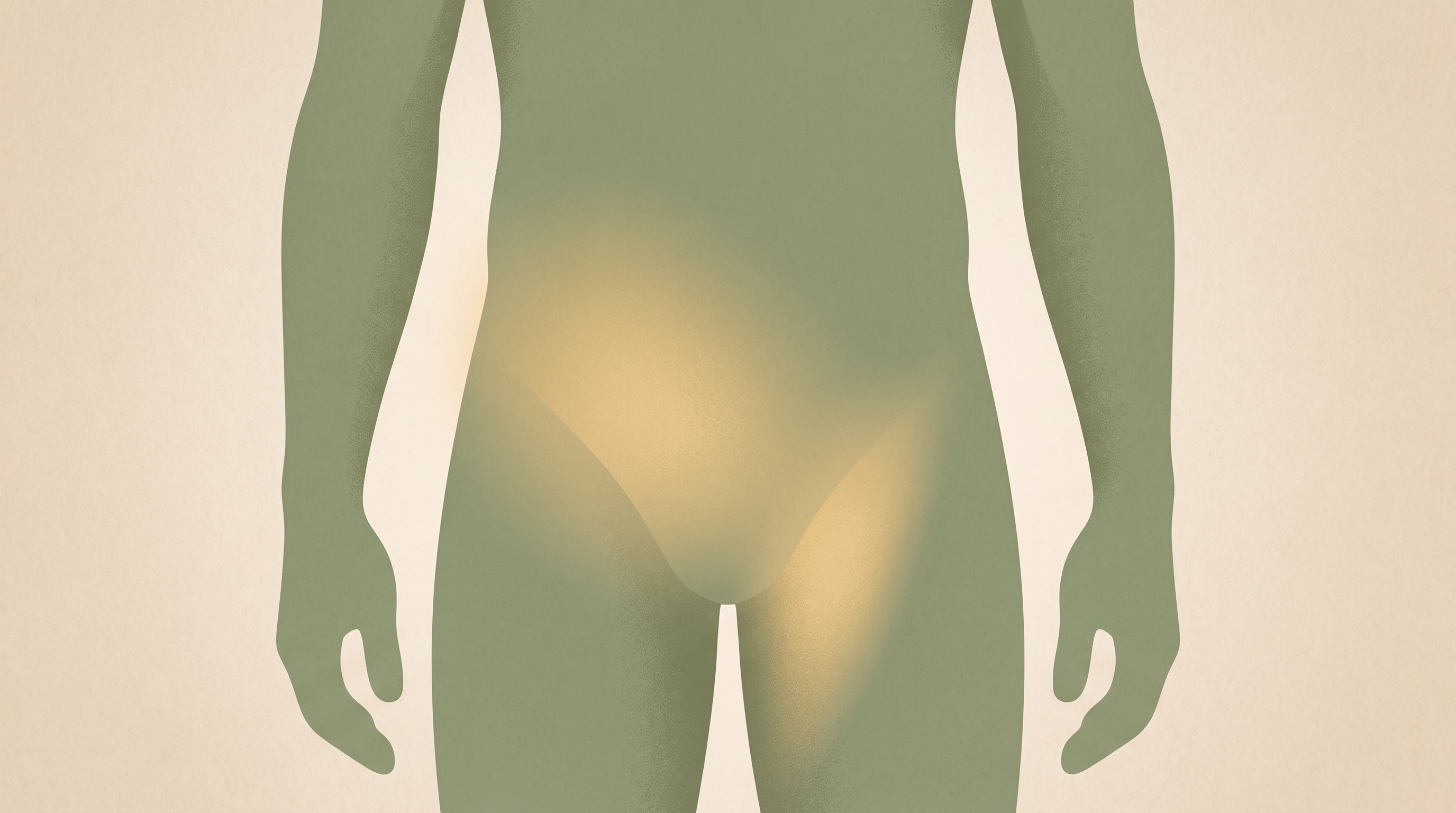
Athletic Pain: Performing at Your Best When Your Body Hurts
Weekend warrior or pro, athletic pain wrecks performance. A pain specialist on what actually prevents it, what to do the moment an injury happens (the RICE advice has changed), and when to see a doctor.

Whether you're a weekend warrior out for fun or a professional athlete, consistent top performance is always the goal. Pain undermines it in every direction. A nagging injury shortens practice sessions. Pain forces small technique changes that expose weak spots in your game. Opponents sense weakness and gain confidence. The athlete in pain loses concentration on the event and starts protecting the injury instead. The cumulative effect is loss of the joy of competition — and often, ultimately, loss of the sport itself. The Joe Montanas, Sandy Koufaxes, and Larry Birds have all had chapters end this way.
This article covers what actually works to prevent athletic pain, what to do immediately when an injury happens, and when to see a specialist. The specific advice has evolved over the last twenty years — some of it in ways that surprise most people.
Preventing injury and pain
The single most important predictor of avoiding sports pain is doing the boring things well:
- Stretching and warm-up before activity.
- Sport-appropriate technique — the right form for what you're doing.
- Proper equipment for the sport, in good repair, fitted correctly.
- Gradual training progression, not weekend heroics after weeks of inactivity.
- Adequate sleep and nutrition. Both matter more than most amateur athletes realize.
- Recovery between hard sessions. Chronic overtraining is a common source of nagging injury.
Each of these is a book of its own. The point is that pain prevention starts long before the event.
The preload concept — pain medication before the event
One approach not commonly practiced by recreational athletes but genuinely useful for the weekend warrior is the concept of the "preload" — getting a good circulating blood level of an over-the-counter analgesic in the body before the event, rather than waiting to take something afterward when pain is already present.
This is a direct extension of what anesthesiologists have learned in the operating room. Traditionally, pain medications were given during or after surgery. Better outcomes are consistently seen when pain medication is given before the surgery starts — pre-emptive analgesia meaningfully reduces postoperative pain and can accelerate recovery. Surgery is, in effect, the most extreme athletic event the body ever undergoes, and the same principle applies to sport.
For a weekend golfer, tennis player, cyclist, or basketball player, taking a few ibuprofen or acetaminophen (Tylenol) before the event will meaningfully reduce pain during and after, and can help you maintain proper technique through the last hour of play when it matters most.
This concept was long discouraged by gym teachers who thought that feeling no pain would set us up for greater injury — that pain was part of the sport. That framing turns out to be wrong for two reasons. First, taking OTC analgesics before recreational sport doesn't cover up a serious injury — those hurt through anything you can buy without a prescription. Second, most sports injuries actually happen when technique breaks down late in the event, exactly when accumulated muscular pain forces small compensations. If you can prevent minor muscular pain from wrecking your form in the fourth quarter, you're less likely to get hurt, not more.
A note for endurance athletes and professionals
The above applies to the recreational and weekend warrior population. The picture is different for a few groups:
- Endurance athletes (marathoners, triathletes, long-distance cyclists) should not routinely preload with NSAIDs. In events lasting several hours, NSAIDs combined with the dehydration and reduced kidney blood flow of prolonged exercise can produce acute kidney injury and increase the risk of exercise-associated hyponatremia. Acetaminophen is generally the safer choice in this population.
- Athletes recovering from tendon or ligament injury should discuss NSAID use with their doctor. There's evidence that anti-inflammatories during early healing may slow tendon and ligament repair.
- Professional athletes should coordinate any pre-event medication use with their team physician, given the higher stakes and the more nuanced training-adaptation and drug-testing considerations at that level.
- Anyone with kidney, cardiovascular, or GI risk factors should check with a physician before making pre-event NSAID use a routine.
For most recreational athletes, none of these apply, and a modest dose of an OTC analgesic before the game is a reasonable and long-underused strategy.
What to do when an injury happens
The classic mnemonic taught for decades was RICE — Rest, Ice, Compression, Elevation. Current sports medicine has updated this framework. Notably, Dr. Gabe Mirkin, who coined RICE in 1978, publicly revised his own recommendation in 2014, noting that prolonged ice and prolonged rest can actually delay healing.
The updated approach recognizes two phases:
In the first 24–48 hours
- Protect the injury from further damage. Stop the activity. Use crutches, a brace, or a sling if needed.
- Elevation of the injured area above the heart when practical.
- Compression with an elastic bandage helps limit swelling.
- Ice for pain control. Twenty minutes on, longer off. Ice is genuinely useful for pain, but the older advice to apply it aggressively to speed healing is no longer supported. Use it for comfort, not indefinitely.
- Avoid prolonged bed rest. Even in the first day or two, gentle movement of adjacent joints and controlled use of the injured area (as pain permits) improves outcomes.
After the acute phase
- Optimal loading. Gradual, progressive loading of the injured tissue is now understood to be one of the most important drivers of recovery for muscle, tendon, and ligament injuries. "Rest until it stops hurting" is often exactly the wrong approach — it delays return and can leave the tissue weaker than before.
- Gentle range-of-motion work as soon as pain allows, progressing to strength and sport-specific movement.
- Heat after the first 48–72 hours can help relax tight surrounding muscles and improve blood flow to the healing area. Warm packs, warm showers, saunas, contrast baths, and therapeutic ultrasound are all reasonable options depending on the injury.
- Anti-inflammatories in the very early phase are increasingly viewed with caution — inflammation is part of how tissue heals, and blocking it may slow recovery. Short-term use for pain is reasonable; routine long-term use during a healing injury is not.
When should I return to my sport?
Most sports physicians recommend not returning to full sport until strength and range of motion are at least 90% of the pre-injury baseline. College and professional teams keep detailed preseason baselines specifically for this comparison. Recreational athletes can use the uninjured opposite side of the body as a rough benchmark, allowing for the fact that the dominant side is normally 5–15% stronger.
Returning before you're ready is one of the most reliable ways to re-injure. Pain during the sport forces subtle technique changes that expose you to secondary injury. Opponents pick up on protection patterns. And you lose your natural game.
When athletic pain becomes chronic
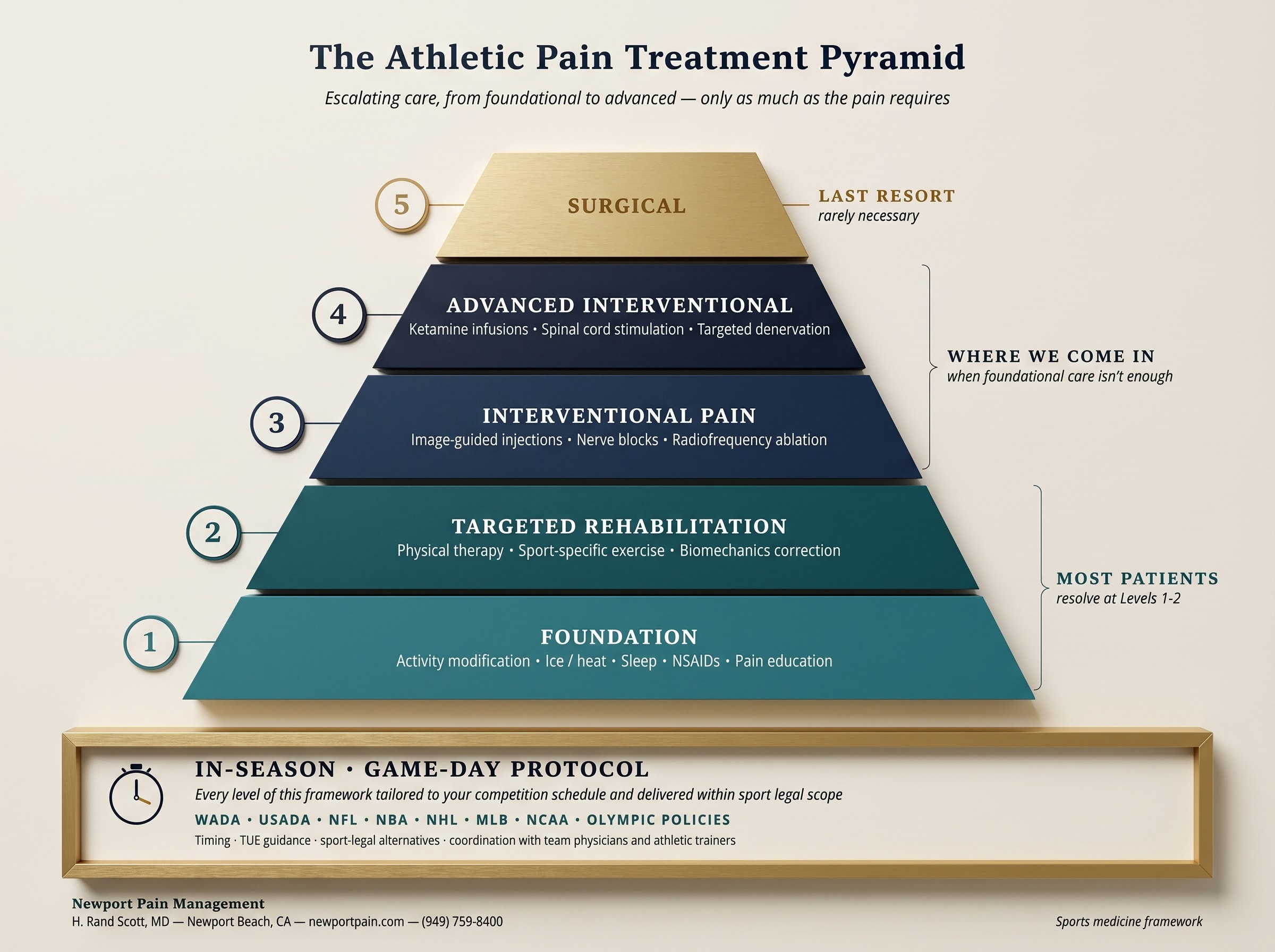
Most acute sports injuries recover with time, sensible early management, and a good rehabilitation program. When athletic pain persists past the expected healing window — or when what should be minor keeps flaring — a pain specialist can help identify what's actually driving it.
Common chronic athletic pain problems that benefit from specialist evaluation:
- Chronic tendinopathy (tennis elbow, Achilles tendinopathy, patellar tendinopathy, plantar fasciitis). Modern approaches include targeted rehabilitation programs, ultrasound-guided injections, and — for the right patient — regenerative approaches such as platelet-rich plasma (PRP).
- Joint pain from cartilage degeneration or old injury (knee, shoulder, hip). Options range from targeted injections through radiofrequency ablation of specific pain-carrying nerves for advanced arthritis in patients not ready for or not candidates for joint replacement.
- Bursitis and repetitive strain that isn't resolving with conservative care. Ultrasound-guided injections into the specific problem area often produce durable relief.
- Nerve entrapment from repeated stress — carpal tunnel, cubital tunnel, tarsal tunnel, thoracic outlet syndrome. Modern evaluation includes electrodiagnostic testing and targeted treatment ranging from injection to surgical release.
- Chronic muscle pain and trigger points that don't resolve with stretching and massage. Targeted trigger point injection or dry needling by a trained clinician can help.
- Post-injury complex regional pain syndrome (CRPS), which can develop after even minor extremity trauma. Early recognition matters — this is one condition where delay meaningfully worsens outcomes.
The bottom line
Good sports pain prevention is fundamentals plus honest recognition of your training load. When injury happens, protect the area early but don't over-rest — get back to appropriate loading as soon as tolerated. For weekend athletes, a modest preload of OTC pain medication before the event is an underused, reasonable strategy. Endurance athletes and pros should approach pre-event medication more carefully in coordination with a team physician. And when pain persists past what you'd expect, get a proper evaluation — most chronic athletic pain has a specific driver, and modern interventional approaches can often address it without ending the sport.
About Newport Pain Management
Newport Pain Management has provided interventional pain diagnosis and treatment in Newport Beach since 1996. Our medical director, H. Rand Scott, MD, is a board-certified anesthesiologist who completed subspecialty training in pain management and served as an attending physician at the Pain Management Clinic at Penn State Hershey Medical Center before founding Newport Pain Management. He holds privileges at Hoag Hospital and Newport Center for Special Surgery and directs the KetaCure Ketamine Infusion Center.
To request an evaluation, call (949) 759-8400 or visit the contact page.
Related reading
- The Athletic Approach to Pain: What Elite Athletes Get That Every Patient Should — the diagnostic and rehab framework behind the practice
- Sports Medicine & Athletic Pain Treatment — practice overview and credentials
- Breaking the Pain Cycle — how chronic pain becomes self-sustaining
Medical disclaimer: This post is for general education and is not a substitute for individual medical advice. Always consult your physician about your specific condition and before making any changes to your medications.
Explore Topics
Written by
H. Rand Scott, MD
Medical Director of Newport Pain Management in Newport Beach since 1996. Board-certified anesthesiologist with subspecialty fellowship training in pain management. Former Penn State football player, 1982 national championship team. Sports medicine clinical training on the Penn State football medical staff. Twice named Orange County Medical Association Physician of Excellence.