By H. Rand Scott, MD — Medical Director, Newport Pain Management · September 2026
Pudendal Neuralgia
Pudendal neuralgia is a nerve pain condition that most patients have never heard of before they are told they may have it — often after months or years of evaluation by other specialists. The pudendal nerve is the main sensory nerve of the perineum, and when it is irritated, compressed, or entrapped along its course, it can produce burning, aching, or shooting pain in the perineum, genitals, buttocks, or rectum. The pain is frequently made worse by sitting and relieved by standing or by sitting on a toilet seat, which is one of the most distinctive clinical features of the condition.
This page covers what pudendal neuralgia is, what causes it, how it is diagnosed, and how it is treated — including the pelvic floor and tailbone contributions that are often overlooked in initial evaluations.
The nerve and where it runs
The pudendal nerve originates from the sacral spine at the S2–S4 levels and travels through the pelvis to reach the perineum. Along its course it passes through several tight anatomic spaces — most importantly a narrow tunnel called Alcock's canal, formed by the fascia along the inner wall of the pelvis. Anywhere along this course, the nerve can be compressed by muscle spasm, by scar tissue, by direct injury, or by chronic pressure on the sitting surface.
The nerve supplies sensation to the entire perineum: in men, the scrotum, penis, and perineal skin; in women, the labia, clitoris, and perineal skin; in both sexes, the skin around the anus and the sensation of the pelvic floor muscles. When it is irritated, pain can be felt anywhere in this territory and often shifts locations over time — a feature that sometimes leads to the mistaken conclusion that the problem is psychological rather than neurologic.
What it feels like
The classic pattern includes several features, though not every patient has all of them:
- Burning, aching, stabbing, or electric-shock pain in the perineum, genitals, buttocks, or rectum. The pain often has a distinctly neurologic quality — patients describe it as "nerve pain" even before they know the diagnosis.
- Worse with sitting, better with standing. This is the single most characteristic feature. Pain often begins within minutes of sitting and steadily worsens; standing or lying down provides partial or complete relief.
- Relief when sitting on a toilet seat. Because a toilet seat leaves the pelvic-floor and perineal area unweighted, patients with pudendal neuralgia often notice that this specific sitting position is much more comfortable than a regular chair. This is a genuinely useful diagnostic clue.
- Foreign-body sensation. Many patients describe feeling as though something is in the rectum or vagina — a golf ball, a marble, a wad of cloth — even when nothing is there.
- Sexual dysfunction. Pain during or after sexual activity, altered genital sensation, or persistent genital arousal are all reported features.
- Urinary or bowel symptoms. Pain with urination or bowel movements, urinary hesitancy or frequency, or a sense of incomplete emptying.
Symptoms are often one-sided but can be bilateral. They frequently worsen through the day and are typically worse after prolonged sitting — long car drives, cross-country flights, sedentary workdays.
What causes pudendal neuralgia
The nerve can be injured, compressed, or irritated by a variety of mechanisms. The most common contributors we see include:
Coccydynia and tailbone trauma
A fall onto the tailbone — from a slip on ice, a fall down stairs, a fall from a horse or bicycle, or a hard landing in sports — can injure the coccyx and its surrounding ligaments. The pudendal nerve runs close to the coccyx and can be irritated or entrapped by the resulting inflammation, scar tissue, or coccygeal malalignment. Patients often present years after the original fall, having attributed their long-standing tailbone pain to something separate from the perineal or genital pain that developed later. In fact, the two are frequently the same problem — coccydynia and pudendal neuralgia coexist far more often than either specialty typically recognizes on its own.
This is one of the reasons a careful history of prior trauma — even trauma years before the pain began — is a routine part of evaluation.
Pelvic floor muscle spasm and pubic sling spasticity
The muscles of the pelvic floor — including the levator ani, obturator internus, and the muscles of the pubic sling — sit in close relationship to the pudendal nerve. When these muscles are chronically contracted or in spasm, they can compress the nerve directly or narrow the anatomic spaces the nerve passes through. Pubic sling spasticity in particular can create sustained tension across the perineum that keeps the nerve irritated even at rest.
Pelvic floor muscle spasm can develop from many sources: chronic guarding after an injury, holding patterns developed over years of sedentary work, previous surgery in the pelvis, chronic constipation with straining, chronic urinary hesitancy, or high-tone pelvic floor patterns that appear to develop without any single identifiable trigger. Whatever the origin, treating the muscle component is often essential — nerve blocks alone rarely produce durable relief when the pelvic floor musculature is driving ongoing compression.
Prolonged sitting and cycling
Chronic pressure on the perineum — from long hours of sitting, especially on hard surfaces, or from cycling with a poorly fitted saddle — can compress the pudendal nerve over time. Cyclists are a well-recognized high-risk group; the diagnosis is common enough among competitive cyclists that the sports medicine literature has substantial dedicated content on it.
Sedentary workers who spend most of their day in a chair are another significant population, particularly those whose posture places sustained pressure on the ischial tuberosities and perineum.
Surgical injury or scarring
Pelvic, gynecologic, urologic, or colorectal surgery can occasionally injure the pudendal nerve directly, or produce scar tissue that later entraps it. Childbirth — particularly prolonged or difficult vaginal delivery — is another well-recognized cause of pudendal nerve injury in women.
Other mechanisms
Direct injury to the perineum, chronic infection, tumors compressing the nerve, and certain systemic conditions can all contribute. In some patients, no clear cause is identifiable — the nerve becomes irritated for reasons that are not fully understood but that respond to treatment nonetheless.
How pudendal neuralgia is diagnosed
There is no single test that definitively diagnoses pudendal neuralgia. The diagnosis is made clinically, based on the pattern of symptoms and the response to evaluation. Several elements go into a competent workup:
- Detailed history focused on the pain pattern (location, quality, aggravating and relieving factors, sitting versus standing), prior trauma including tailbone falls that may have occurred years before, prior surgeries, cycling and sitting habits, and associated urinary, bowel, or sexual symptoms.
- Focused physical examination of the perineum, pelvic floor, tailbone, and lumbar spine. In appropriate patients, an internal pelvic exam to assess pelvic floor muscle tone is genuinely useful and often reveals the pubic sling spasticity that is contributing.
- Imaging when indicated — typically MRI of the pelvis and sometimes MR neurography of the pudendal nerve — to look for structural causes, scar tissue, or nerve compression that would change the treatment plan.
- Diagnostic pudendal nerve block. The single most useful test. A small volume of local anesthetic is placed near the pudendal nerve under ultrasound or fluoroscopic guidance. If the pain is substantially relieved for the duration of the anesthetic, this confirms the pudendal nerve is at least part of the pain generator. Response to a diagnostic block also predicts likely response to subsequent therapeutic procedures.
The Nantes criteria — a set of clinical features developed by a group of pudendal neuralgia specialists in France — is the most widely used framework for making the diagnosis, though not every patient with pudendal neuralgia meets all of them.
Treatment
Effective treatment usually combines several approaches. Rarely does a single intervention resolve pudendal neuralgia on its own — the combination of nerve treatment, muscle treatment, and behavioral changes is what produces durable relief.
Behavioral and self-management
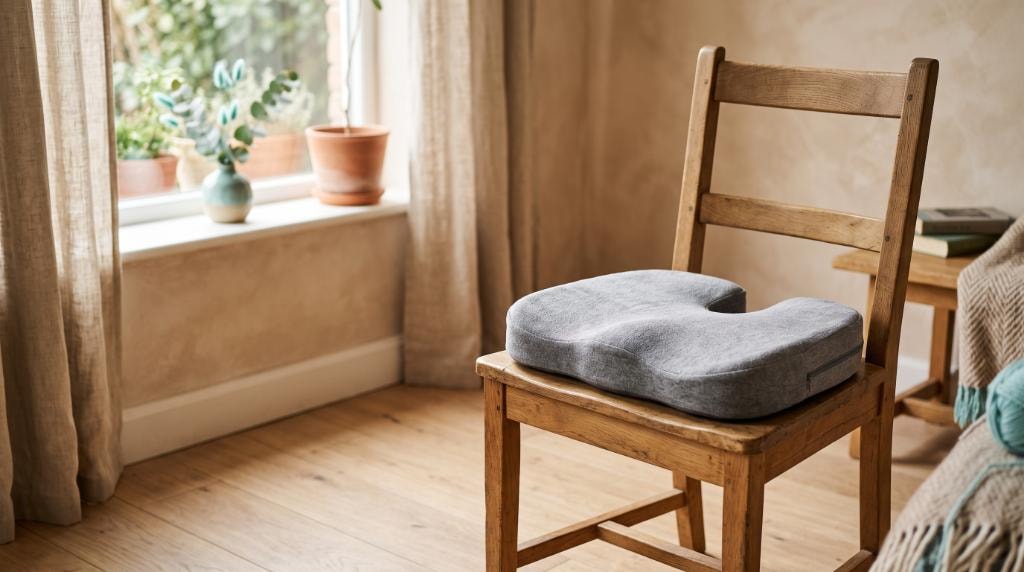
Reducing time spent sitting, using a cutout cushion designed to keep pressure off the perineum during unavoidable sitting, changing bicycle saddle design or discontinuing cycling during active treatment, and avoiding activities that worsen symptoms. These changes are not glamorous but they are often essential — continued compression of an already irritated nerve will defeat any medical treatment. A cutout cushion in particular is one of the simplest and highest-value interventions patients can make on their own before a first appointment.
Pelvic floor physical therapy
A pelvic floor physical therapist with specific training in pudendal neuralgia and high-tone pelvic floor dysfunction is often the single most important member of the treatment team. Skilled internal and external manual therapy releases the muscle spasm that is compressing the nerve, teaches patients how to identify and release their own holding patterns, and addresses the postural and behavioral factors sustaining the problem. Not every pelvic floor PT has this specific expertise — the therapist matters more than the discipline in this territory.
Medications
Medications for neuropathic pain — certain antidepressants and antiseizure medications used at appropriate doses — can reduce the nerve pain component. Muscle relaxants sometimes help the muscle spasm component. Opioid medications are generally poorly effective for neuropathic pain and are rarely a good long-term strategy for this condition.
Interventional procedures
Diagnostic and therapeutic pudendal nerve blocks — image-guided injections of local anesthetic and often a small dose of steroid — are both a diagnostic tool and, in many patients, a therapeutic one. A series of blocks over several months, combined with pelvic floor physical therapy, produces meaningful relief for many patients.
Pulsed radiofrequency of the pudendal nerve is an option for patients whose response to blocks has been positive but limited in duration. The procedure modulates the nerve's ability to transmit pain signals without destroying it and can extend the duration of relief beyond what a standard block achieves.
For patients whose pain has a coccygeal component, ganglion impar blocks — image-guided injections at the small autonomic ganglion in front of the coccyx — can address the tailbone-region contribution to the pain.
Surgical decompression
Surgical release of the pudendal nerve is reserved for patients whose pain has not responded adequately to conservative and interventional treatments and who have imaging or clinical evidence of nerve entrapment amenable to surgical release. The surgery is a specialized procedure performed by a small number of surgeons nationally; referral to a center with specific expertise is appropriate when this option is being considered.
When to see a pain specialist
If perineal, genital, buttock, or rectal pain has been present for more than three months, if it is worse with sitting and better with standing, if it has not been adequately explained by a urologist, gynecologist, or colorectal evaluation, or if it is interfering with sitting, work, sleep, or intimate life, a pain specialist evaluation is appropriate. Pudendal neuralgia is under-recognized in general medical care but well-recognized and treatable within pain specialist practice, and delays in diagnosis often extend the treatment course rather than shortening it.
About Newport Pain Management
Newport Pain Management has provided interventional pain diagnosis and treatment in Newport Beach since 1996. Our medical director, H. Rand Scott, MD, is a board-certified anesthesiologist who completed subspecialty training in pain management and served as an attending physician at the Pain Management Clinic at Penn State Hershey Medical Center before founding Newport Pain Management. He holds privileges at Hoag Hospital and Newport Center for Special Surgery and directs the KetaCure Ketamine Infusion Center.
To request an evaluation for pudendal neuralgia, call (949) 759-8400 or visit the contact page.
This article is for general education and is not a substitute for individual medical advice.
Educational content only. Not medical advice. See our Medical Disclaimer for details.